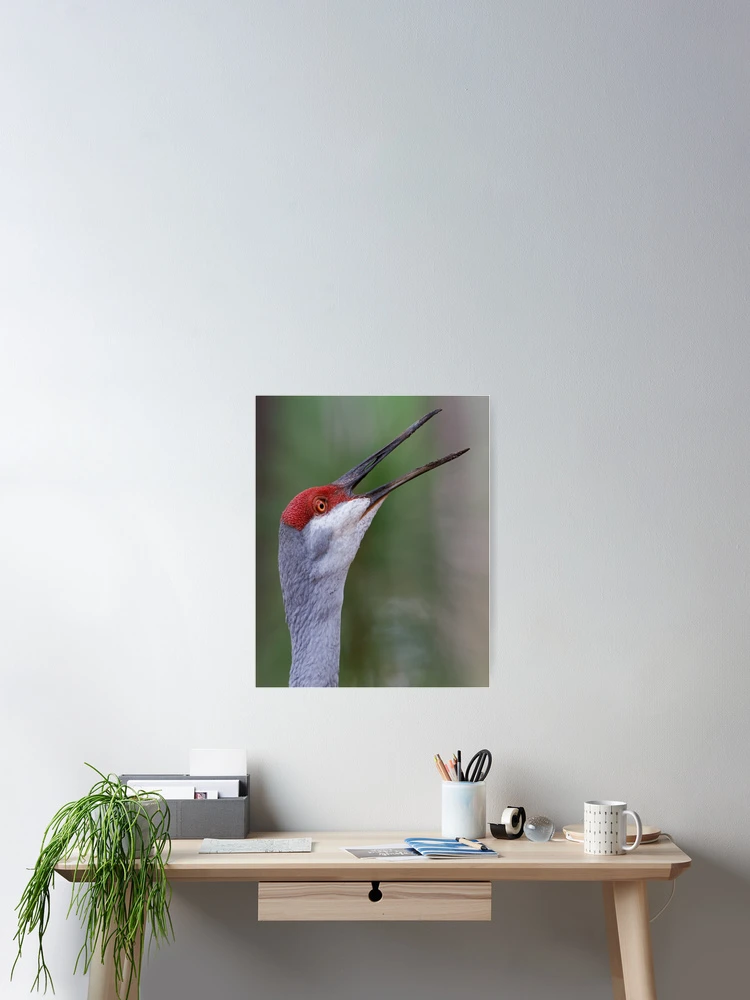

Aime ce Ruckus Poster

Créé et vendu par WorldDesign
35,98 $US
Style

PosterPapier épais, semi-brillant
35,98 $US
 Retours facilesUn problème ? Pas de panique. On corrige le tir.
Caractéristiques du produit
- Impression sur du papier pour affiche. Extrêmement polyvalent, il est parfait pour reproduire à la fois des œuvres d'art et des photographies.
- Formats adaptés aux dimensions de l’œuvre. Si vous souhaitez l'encadrer vous-même, veuillez consulter le guide des tailles.
- Bordure blanche de 2,5 à 5 cm pour l'encadrement incluse dans les dimensions.
- Expédiée dans un emballage protecteur.
- Comme chaque article est fabriqué spécialement pour vous par votre fournisseur tiers local, il peut y avoir de légères différences dans le produit reçu
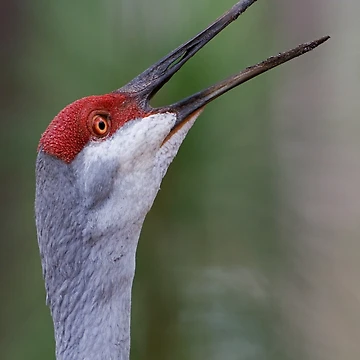
Aime ce Ruckus
Sandhill crane calling out and bonding with its mate...you've got to love a good ruckus. Location: Florida, USA 500mm Lens Description: ADULT Has mainly blue-gray plumage, palest on face, red crown, and variable rufous feathering on wings. Legs and daggerlike bill are dark. JUVENILE Has variably blue-gray and rufous plumage, but typically rufous predominates on head, neck, and back. Bill is dull pink and red on crown is absent. Dimensions Length: 34-48" (86-122 cm); Wngspn: 6' 8" (2 m) Endangered Status: The Mississippi Sandhill Crane, a subspecies of the Sandhill Crane, is on the U.S. Endangered Species List. It is classified as endangered in Mississippi. Apparently the Sandhill Crane was always more numerous than the larger Whooping Crane, and the fact that it breeds mostly in the remote Arctic has saved it from the fate of its relative. But it is sensitive to human disturbance, and the draining of marshes has reduced nesting populations in the United States. The Mississippi subspecies declined in the mid-20th century when its preferred savannah habitat was planted over with slash pines. Commercial and residential development, the building of highways, pollution, and other factors have caused further deterioration to the habitat. Most of the current crane population and its habitat are protected in the Mississippi Sandhill Crane National Wildlife Refuge. The Grand Bay National Wildlife Refuge to the southeast may be able to sustain a second population of cranes. Habitat: Vast majority of population nests on remote tundra or expansive northern wetlands, and winters in wetland areas with adjacent farmland in southern U.S. and Mexico. Small population (4,000-5,000 birds) is resident in Florida, numbers boosted in winter by migrants. Observation Tips: At traditional migration staging areas and winter roosts, the massive numbers of Sandhill Cranes provide one of the greatest wildlife spectacles. Range: Alaska, Eastern Canada, Mid-Atlantic, Plains, Southeast, Rocky Mountains, Great Lakes, California, Florida, Texas, New England, Western Canada, Southwest, Northwest Discussion: Large and almost unmistakable bird with a stately posture and gait. Outside breeding season, Sandhill is invariably seen in large flocks. In flight, Sandhill holds head and neck outstretched. Seen from below in flight, note mainly pale flight feathers. Arctic nesters are appreciably smaller and shorter-billed than southern breeders. Sexes are similar. Source: enature.com
Disponible également sur


Envie d'autre chose ?
Lancez une nouvelle recherche.Tags associés
Tags pour la catégorie Posters
Cette section inclut les différents tags associés au Poster de cette page. Chaque tag renvoie à d'autres Posters auxquels il est également associé.
Tags pour tous les produits
Cette section inclut les différents tags associés au produit de cette page. Chaque tag renvoie à d'autres produits auxquels il est également associé.
Traduit par 
Imprimé rien que pour vous
Votre commande est imprimée à la demande, puis livrée chez vous, où que vous soyez.Paiement sécurisé
Carte bancaire, PayPal, Sofort : vous choisissez votre mode de paiement.Retour gratuit
L'échange ou le remboursement est garanti sur toutes vos commandes.Service dédié
Une question ? Contactez-nous ! Nous sommes joignables 24 h/24 et 7 jours/7.