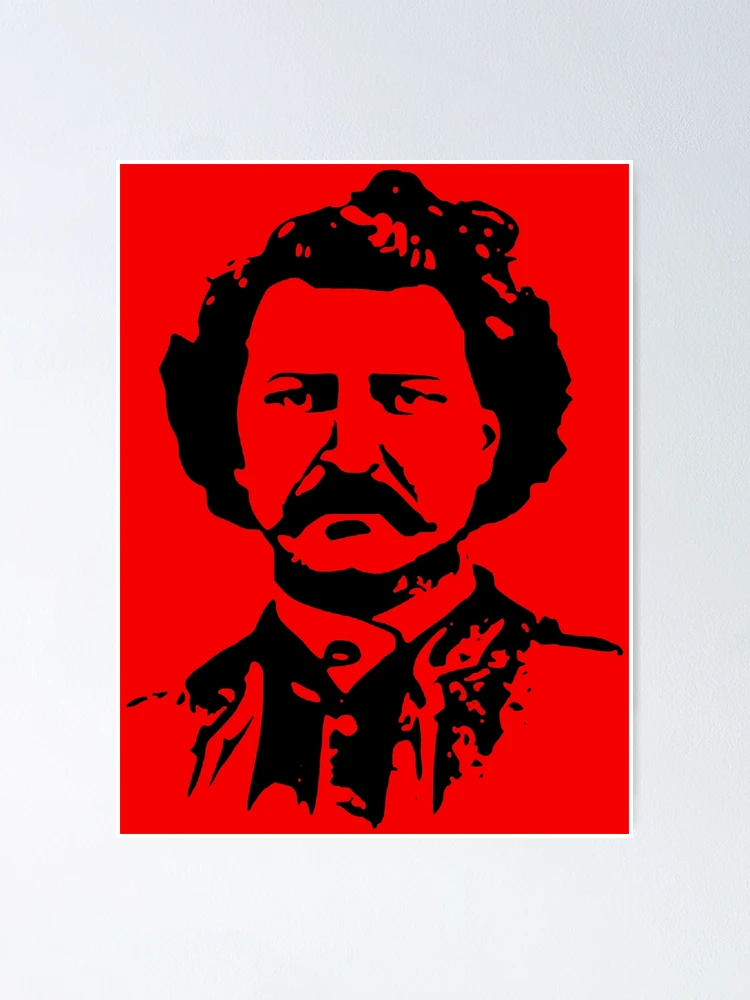
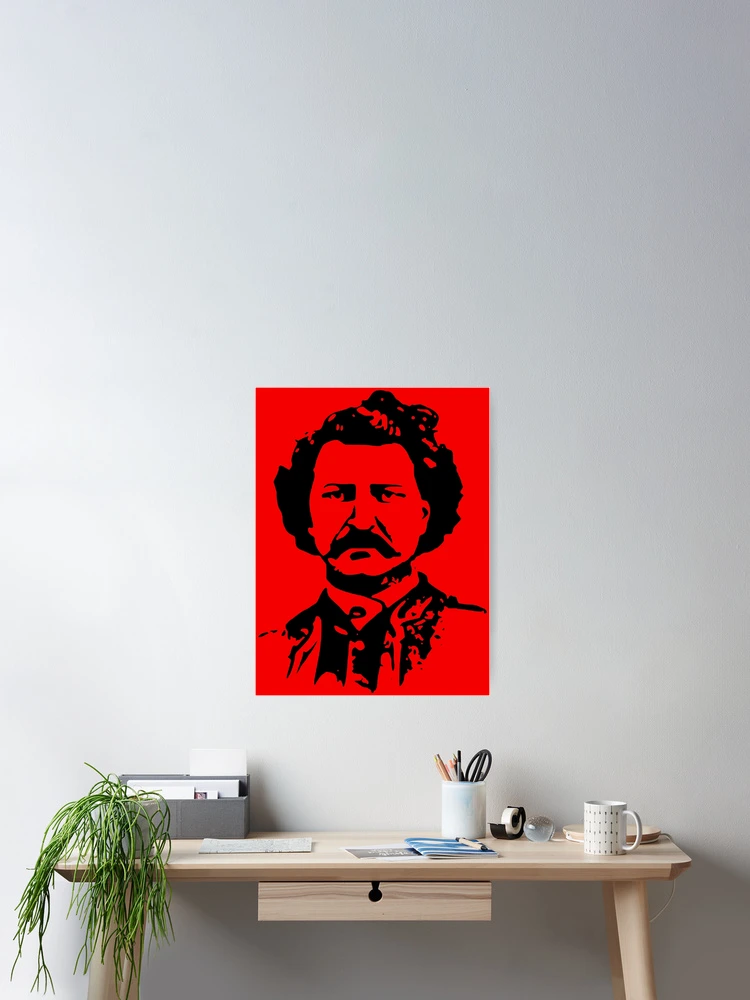

Louis Riel Póster

Diseñado y vendido por truthtopower
15,11 US$
El -30 % acaba pronto
Estilo

PósterPapel grueso, acabado semibrillante
15,11 US$
 Devoluciones fáciles¿Hay algún problema? No importa, te lo solucionamos.
- Impreso en papel para pósters. Es extremadamente versátil, por lo que resulta perfecto para reproducir diseños o fotografías.
- Tamaños personalizados dependiendo de las dimensiones de la obra. Mira la guía de tamaños si quieres enmarcar tú.
- Incluye un margen blanco de 1‑2 pulgadas (2,5‑5 cm) para que el marco quede perfecto.
- Se envían en un embalaje protector.
- Dado que cada producto está hecho solo para ti por imprentas independientes locales, es posible que haya ligeras variaciones en el producto recibido
Louis Riel
Louis David Riel (22 October 1844 – 16 November 1885) was a Canadian politician, a founder of the province of Manitoba, and a political leader of the Métis people of the Canadian prairies. He led two resistance movements against the Canadian government and its first post-Confederation prime minister, Sir John A. Macdonald. Riel sought to preserve Métis rights and culture as their homelands in the Northwest came progressively under the Canadian sphere of influence. Over the decades, he has been made a folk hero by the Francophones, the Catholic nationalists, the native rights movement, and the New Left student movement. Riel has received more scholarly attention than practically any other figure in Canadian history.
His first resistance was the Red River Rebellion of 1869–1870. The provisional government established by Riel ultimately negotiated the terms under which the modern province of Manitoba entered the Canadian Confederation. Riel ordered the execution of a Protestant who annoyed him, Thomas Scott, and fled to the United States to escape prosecution. Despite this, he is frequently referred to as the "Father of Manitoba". While a fugitive, he was elected three times to the Canadian House of Commons, although he never assumed his seat. During these years, he was frustrated by having to remain in exile despite his growing belief that he was a divinely chosen leader and prophet, a belief which would later resurface and influence his actions. Because of this new religious conviction, Catholic leaders who had supported him before increasingly repudiated him. He married in 1881 while in exile in Montana in the United States; he fathered three children.
In 1884 Riel was called upon by the Métis leaders in Saskatchewan to articulate their grievances to the Canadian government. Instead he organized a military resistance that escalated into a military confrontation, the North-West Rebellion of 1885. Ottawa used the new rail lines to send in thousands of combat soldiers. It ended in his arrest and conviction for high treason. Rejecting many protests and popular appeals, Prime Minister MacDonald decided to hang him. Riel was seen as a heroic victim by francophone Canadians; his execution had a lasting negative impact on Canada, polarizing the new nation along ethno-religious lines. Although only a few hundred people were directly affected by the Rebellion in Saskatchewan, the long-term result was that the Prairie provinces would be controlled by the Anglophones, not the Francophones. An even more important long-term impact was the bitter alienation Francophones across Canada showed and anger against the repression of their countrymen.
Riel's historical reputation has long been polarized between portrayals as a dangerous half-insane religious fanatic and rebel against the Canadian nation, or by contrast a heroic rebel who fought to protect his Francophone people from the unfair encroachments of an Anglophone national government. He is increasingly celebrated as a proponent of multiculturalism, although that downplays his primary commitment to Métis nationalism and political independence.
También está disponible en


¿Estás buscando otra cosa?
Escribe lo que quieras aquí abajo.Etiquetas relacionadas
Etiquetas para la categoría Pósters
Esta sección contiene una recopilación de etiquetas relacionadas con el siguiente producto: Póster. Estas etiquetas te llevarán a una búsqueda de Pósters relacionadas con la etiqueta correspondiente.
Etiquetas para todos los productos
Esta sección contiene una recopilación de etiquetas que te llevarán a una búsqueda de productos relacionados con la etiqueta correspondiente.
Traducido por 
Envíos a todo el mundo
Disfruta del arte independiente desde prácticamente cualquier rincón del planeta.Pagos seguros
Compra con total seguridad mediante PayPal, tarjeta de crédito o débito o Sofort.Devoluciones gratuitas
Garantía de devolución o cambio para todas las compras.Atención personalizada
Estamos disponibles 24 horas