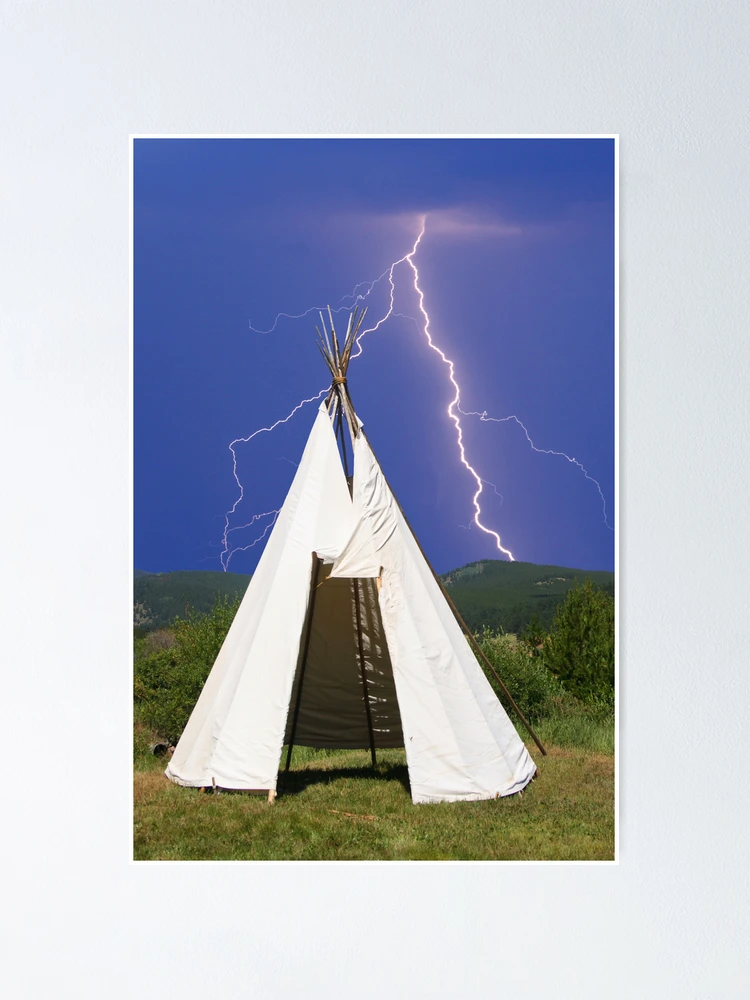


Teepee Lightning Poster

Designed and sold by Bo Insogna
$19.34
20% off ends soon
Style

PosterHeavy poster paper, semigloss finish
$19.34
 Super-easy returnsProblem? No problem. We’ll fix it, fast.
Product features
- Printed on poster paper. Extremely versatile, making it perfect for reproducing both artwork and photographs
- Custom sizes, based on artwork dimensions. Check size chart if self-framing
- Dimensions include a 1 - 2 inch (2.5 - 5.0cm) white border to assist in framing
- Shipped in protective packaging
- Since every item is made just for you by your local third-party fulfiller, there may be slight variances in the product received

Teepee Lightning
A TeePee and Lightning above in the same shape.
A tipi (also, tepee) is a conical tent originally made of animal skins or birch bark and popularized by the Native Americans of the Great Plains. Tepees are stereotypically associated with Native Americans in general, but Native Americans from places other than the Great Plains used different types of dwellings. The term wigwam (a domed structure) is sometimes incorrectly used to refer to tepees.
The tipi was durable, provided warmth and comfort in winter, was dry during heavy rains, and was cool in the heat of summer. Tipis could be disassembled and packed away quickly when a tribe decided to move, and could be reconstructed quickly when the tribe settled in a new area. This portability was important to those Plains Indians who had a nomadic lifestyle.
Modern tipi covers are usually made of canvas. Contemporary users of tipis include historical reenactors, back-to-the-land devotees, and Native American families attending Powwows or Encampments who wish to preserve and pass on a part of their heritage and tradition.
The word "tipi" comes into English from the Lakota language; the word thípi consists of two elements: the verb thí, meaning "to dwell," and a pluralizing enclitic (a suffix-like ending that marks the subject of the verb as plural), pi, and means "they dwell." In Lakota, formal verbs can be used as nouns, and this is the case with thípi which in practice just means "house." (Wikipedia)
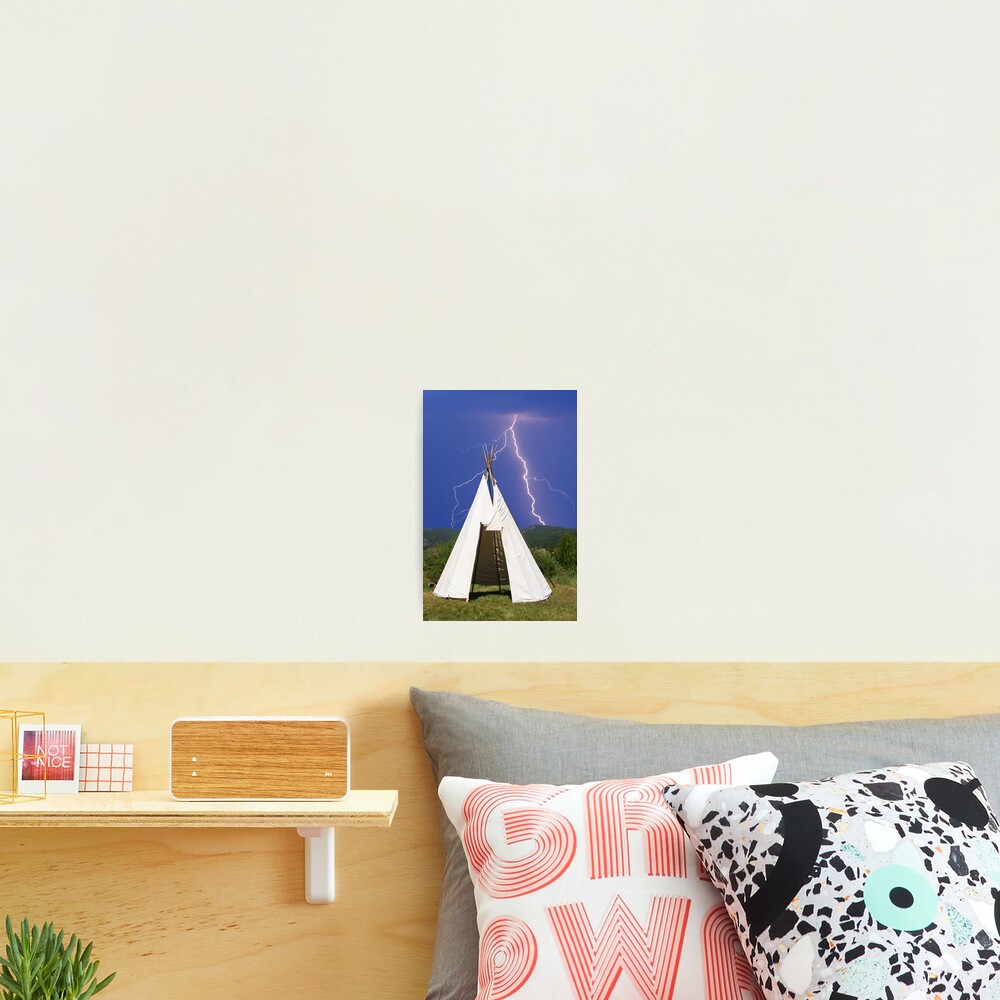
Also available on





Looking for something different?
Search below.Related Tags
Posters Tags
This section provides a collection of tags that relate to the Poster on this page. These tags each link to a search for the Posters that relate to the tag.
All Product Tags
This section provides a collection of tags that each link to a search for any products that relate to the tag.
Trending topics
This section provides a collection of tags that each link to a search for any products that relate to the tag.
Secure Payments
100% Secure Payment with 256-bit SSL encryption