

Showing Off Poster

Designed and sold by WorldDesign
$24.18
20% off ends soon
Style

PosterHeavy poster paper, semigloss finish
$24.18
 Super-easy returnsProblem? No problem. We’ll fix it, fast.
Product features
- Printed on poster paper. Extremely versatile, making it perfect for reproducing both artwork and photographs
- Custom sizes, based on artwork dimensions. Check size chart if self-framing
- Dimensions include a 1 - 2 inch (2.5 - 5.0cm) white border to assist in framing
- Shipped in protective packaging
- Since every item is made just for you by your local third-party fulfiller, there may be slight variances in the product received

Showing Off
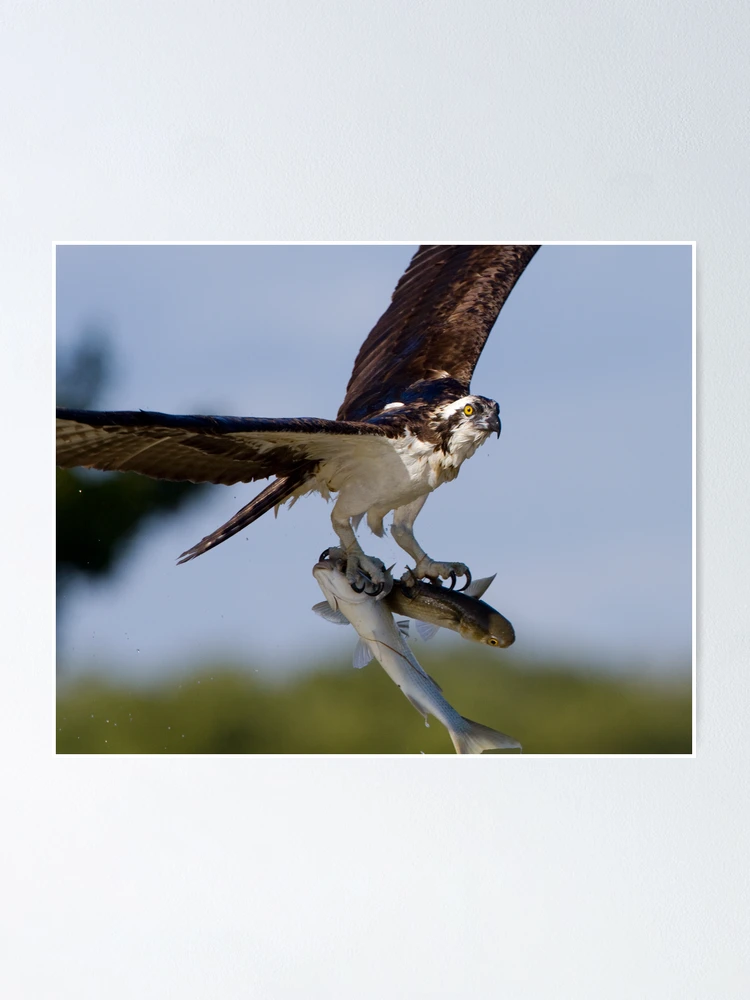
As I paddled my kayak around Florida Bay (Everglades National Park), I positioned myself where the Ospreys were kiting and the tide was coming in with dinner. About twenty feet from the bow, this osprey dove into the water...the osprey and fish (mullets) are still covered with a layer of water. Yes, the osprey flew off with both mullets. However, one has to wonder how the osprey handled this situation. Normally, they catch only one fish so it's easy to land on a branch and eat...but one in each talon...what is an osprey to do? Florida, USA, 500mm Lens Description: ADULT Has mainly brown upperparts, except for the pale crown; underparts generally look pale white; body is mostly unmarked, except for streaked chest band (most obvious in females). In flight, seen from below, inner wing coverts are pale except for dark carpal patch, while flight feathers have dark brown barring; note the dark terminal band on the barred tail. JUVENILE Similar to adult, but dark elements of plumage are paler, back and upper wing covert feathers have pale margins, and nape and chest are often flushed orange-buff. Dimensions Length: 21-24" (53-61 cm); Wngspn: 4' 6 "-6' (1.4-1.8 m) Habitat: Fairly common summer visitor to northern half of region. Associated with fish-rich lakes, rivers, and coasts. Most migrate south to Central and South America, but in southern states (notably Florida and Gulf coast) present year-round. Observation Tips: Usually easy to find on suitable wetland habitats within range. Spends long periods perched, often on a dead tree, and so careful scrutiny of waterside trees may be required. In some areas, they build their twiggy nests on manmade structures such as powerline poles and towers. Range: Southeast, Plains, Southwest, Alaska, Rocky Mountains, California, Texas, Great Lakes, Mid-Atlantic, Florida, Eastern Canada, Western Canada, New England, Northwest Voice: Utters various whistling calls. Discussion: The classic fish-eating raptor, invariably seen near water. In soaring flight, with its rather long, narrow wings, it can look rather gull-like. However, fishing technique is unmistakable: typically hovers and then plunges, talons first, into water. Information Source: enature.com
Also available on


Looking for something different?
Search below.Related Tags
Posters Tags
This section provides a collection of tags that relate to the Poster on this page. These tags each link to a search for the Posters that relate to the tag.
All Product Tags
This section provides a collection of tags that each link to a search for any products that relate to the tag.
Trending topics
This section provides a collection of tags that each link to a search for any products that relate to the tag.
Secure Payments
100% Secure Payment with 256-bit SSL encryption


