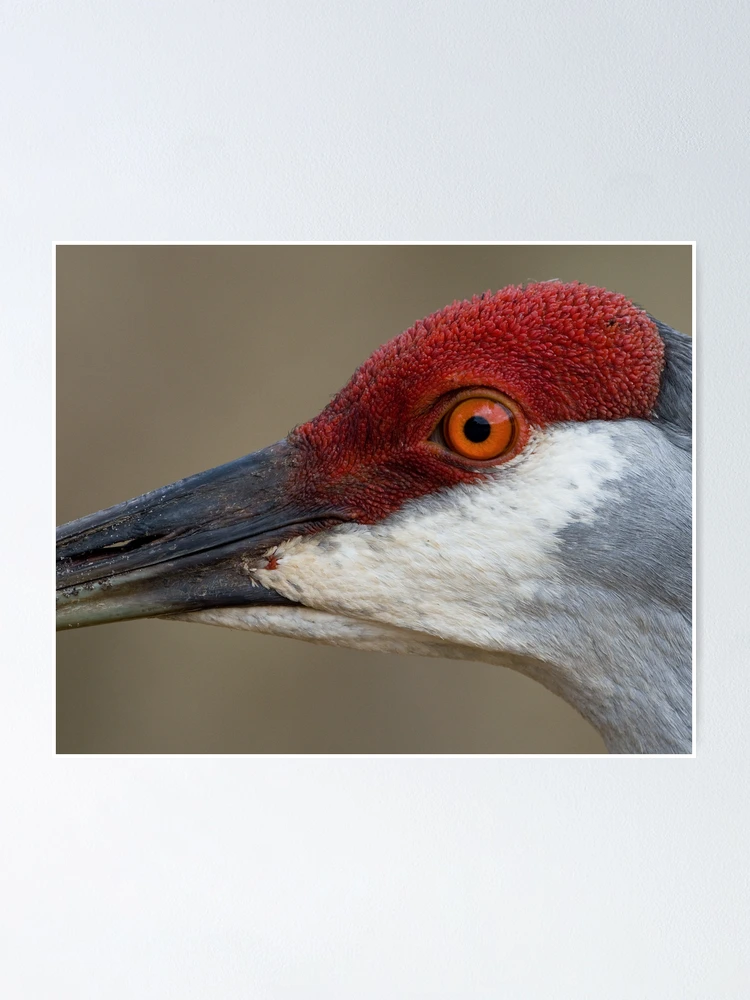


Red Cap Poster

Designed and sold by WorldDesign
$30.22
Style

PosterHeavy poster paper, semigloss finish
$30.22
 Super-easy returnsProblem? No problem. We’ll fix it, fast.
Product features
- Printed on poster paper. Extremely versatile, making it perfect for reproducing both artwork and photographs
- Custom sizes, based on artwork dimensions. Check size chart if self-framing
- Dimensions include a 1 - 2 inch (2.5 - 5.0cm) white border to assist in framing
- Shipped in protective packaging
- Since every item is made just for you by your local third-party fulfiller, there may be slight variances in the product received

Red Cap
Up close view of a sandhill crane's red eye and cap. Please don't feed sandhill cranes, it's extremely detrimental to the cranes and creates a safety hazard for motorists. In fact, it's unlawful in the state of Florida to feed sandhill cranes. Chicks full of crackers, bread, corn, dog food, etc. can starve to death and/or become too weak to keep up with their parents or avoid predators…they need the high fat/protein provided by insects and other natural foods. Furthermore, cranes and any chicks that survive are habituated to cars, greatly increasing their chance of getting hit by fast-moving traffic outside the community where they were fed...causing a hazardous condition for motorists and other citizens. I've seen numerous habituated cranes killed by traffic and/or displaying auto-related injuries. Here's a link to the Florida Fish and Wildlife website explaining the reasons and the law in more detail (help me spread the word): Florida Fish & Wildlife Description ADULT Has mainly blue-gray plumage, palest on face. Note red crown and variable rufous feathering on wings. Legs and daggerlike bill are dark. JUVENILE Has variably blue-gray and rufous plumage, but typically rufous predominates on head, neck, and back. Bill is dull pink and red on crown is absent. Dimensions Length: 34-48" (86-122 cm); Wngspn: 6' 8" (2 m) Endangered Status The Mississippi Sandhill Crane, a subspecies of the Sandhill Crane, is on the U.S. Endangered Species List. It is classified as endangered in Mississippi. Apparently the Sandhill Crane was always more numerous than the larger Whooping Crane, and the fact that it breeds mostly in the remote Arctic has saved it from the fate of its relative. But it is sensitive to human disturbance, and the draining of marshes has reduced nesting populations in the United States. The Mississippi subspecies declined in the mid-20th century when its preferred savannah habitat was planted over with slash pines. Commercial and residential development, the building of highways, pollution, and other factors have caused further deterioration to the habitat. Most of the current crane population and its habitat are protected in the Mississippi Sandhill Crane National Wildlife Refuge. The Grand Bay National Wildlife Refuge to the southeast may be able to sustain a second population of cranes. Habitat Very locally common. Vast majority of population nests on remote tundra or expansive northern wetlands, and winters in wetland areas with adjacent farmland in southern U.S. and Mexico. Small population (4,000-5,000 birds) is resident in Florida, numbers boosted in winter by migrants. Observation Tips At traditional migration staging areas and winter roosts, the massive numbers of Sandhill Cranes provide one of the greatest wildlife spectacles. Range Alaska, Eastern Canada, Mid-Atlantic, Plains, Southeast, Rocky Mountains, Great Lakes, California, Florida, Texas, New England, Western Canada, Southwest, Northwest Discussion Large and almost unmistakable bird with a stately posture and gait. Confusion with Great Blue Heron is possible, but note differences in plumage, structure, and head markings. Outside breeding season, Sandhill is invariably seen in large flocks, whereas Great Blue is usually solitary. In flight, Sandhill holds head and neck outstretched, while Great Blue has neck hunched into an "S" shape. Seen from below in flight, note mainly pale flight feathers. Arctic nesters are appreciably smaller and shorter-billed than southern breeders. Sexes are similar. Information Source: enature.com
Also available on


Looking for something different?
Search below.Related Tags
Posters Tags
This section provides a collection of tags that relate to the Poster on this page. These tags each link to a search for the Posters that relate to the tag.
All Product Tags
This section provides a collection of tags that each link to a search for any products that relate to the tag.
Trending topics
This section provides a collection of tags that each link to a search for any products that relate to the tag.
Secure Payments
100% Secure Payment with 256-bit SSL encryption


