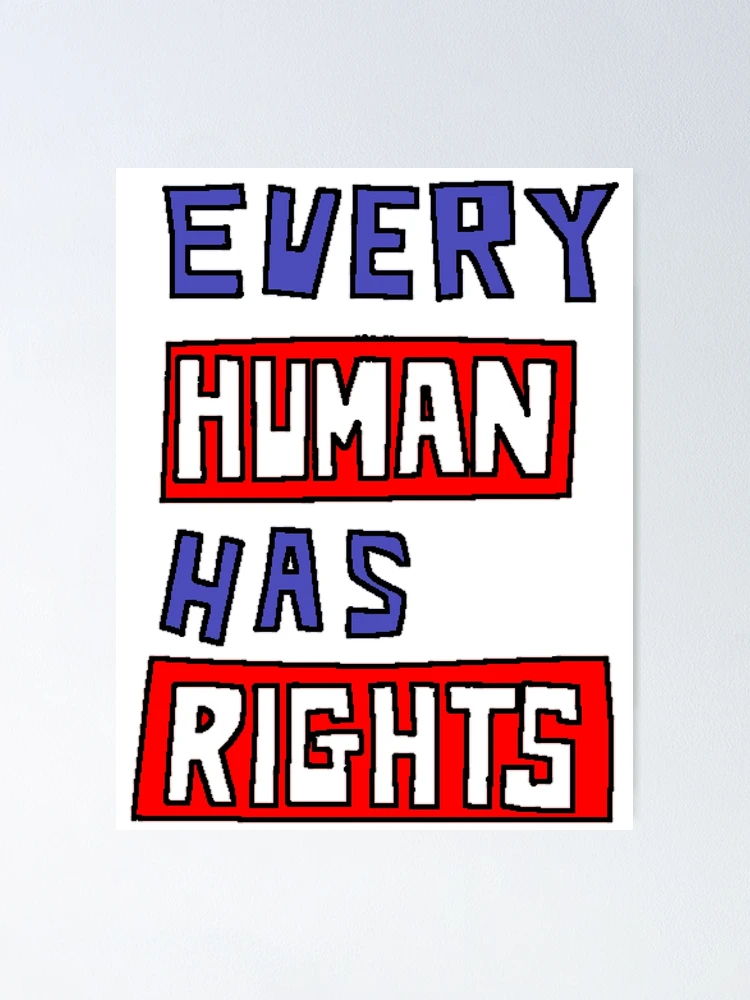


HUMAN RIGHTS Poster
Designed and sold by truthtopower
$18.13
Style
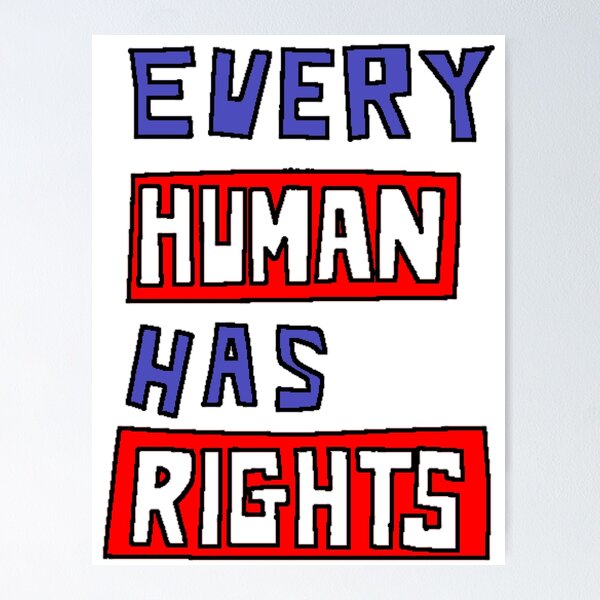
PosterHeavy poster paper, semigloss finish
$18.13
 Super-easy returnsProblem? No problem. We’ll fix it, fast.
Product features
- Printed on poster paper. Extremely versatile, making it perfect for reproducing both artwork and photographs
- Custom sizes, based on artwork dimensions. Check size chart if self-framing
- Dimensions include a 1 - 2 inch (2.5 - 5.0cm) white border to assist in framing
- Shipped in protective packaging
- Since every item is made just for you by your local third-party fulfiller, there may be slight variances in the product received

HUMAN RIGHTS
The Civil Rights Movement or 1960s Civil Rights Movement, sometimes anachronistically referred to as the "African-American Civil Rights Movement" although the term "African American" was not used in the 1960s, encompasses social movements in the United States whose goals were to end racial segregation and discrimination against African Americans and to secure legal recognition and federal protection of the citizenship rights enumerated in the Constitution and federal law. This article covers the phase of the movement between 1954 and 1968, particularly in the South. The leadership was African-American, much of the political and financial support came from labor unions (led by Walter Reuther), major religious denominations, and prominent white politicians such as Hubert Humphrey and Lyndon B. Johnson.
The movement was characterized by major campaigns of civil resistance. Between 1955 and 1968, acts of nonviolent protest and civil disobedience produced crisis situations and productive dialogues between activists and government authorities. Federal, state, and local governments, businesses, and communities often had to respond immediately to these situations that highlighted the inequities faced by African Americans. Forms of protest and/or civil disobedience included boycotts such as the successful Montgomery Bus Boycott (1955–56) in Alabama; "sit-ins" such as the influential Greensboro sit-ins (1960) in North Carolina; marches, such as the Selma to Montgomery marches (1965) in Alabama; and a wide range of other nonviolent activities.
Also available on














Looking for something different?
Search below.Related Tags
Posters Tags
This section provides a collection of tags that relate to the Poster on this page. These tags each link to a search for the Posters that relate to the tag.
All Product Tags
This section provides a collection of tags that each link to a search for any products that relate to the tag.
Trending topics
This section provides a collection of tags that each link to a search for any products that relate to the tag.
Secure Payments
100% Secure Payment with 256-bit SSL encryption