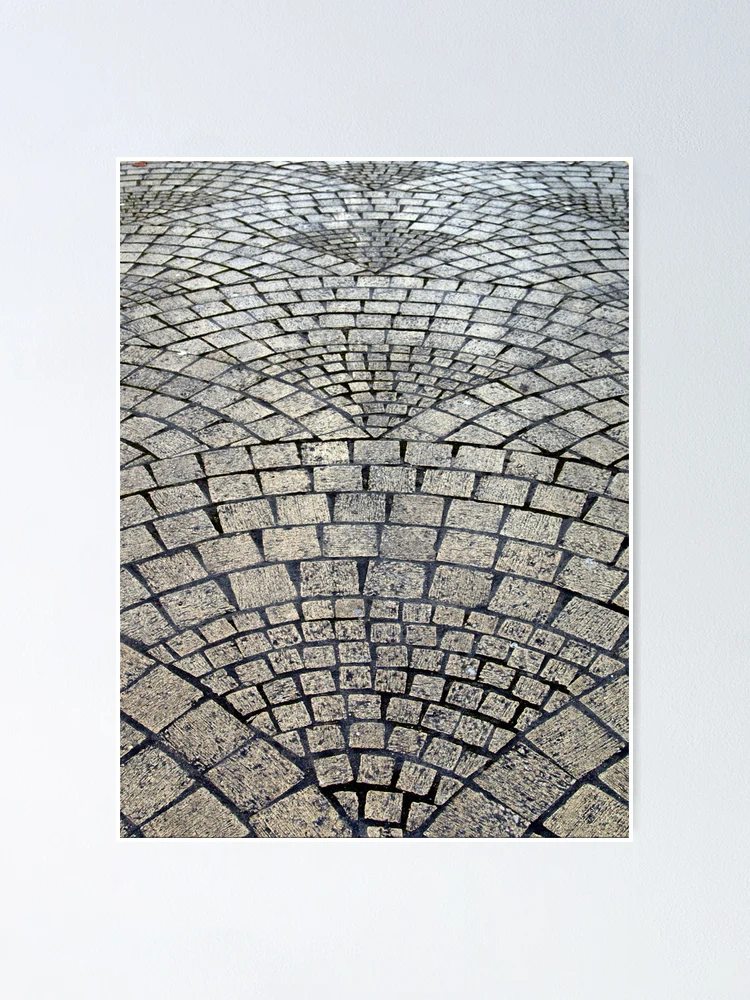


Geometric Patterns Poster
Designed and sold by Clive
$24.18
Style

PosterHeavy poster paper, semigloss finish
$24.18
 Super-easy returnsProblem? No problem. We’ll fix it, fast.
Product features
- Printed on poster paper. Extremely versatile, making it perfect for reproducing both artwork and photographs
- Custom sizes, based on artwork dimensions. Check size chart if self-framing
- Dimensions include a 1 - 2 inch (2.5 - 5.0cm) white border to assist in framing
- Shipped in protective packaging
- Since every item is made just for you by your local third-party fulfiller, there may be slight variances in the product received

Geometric Patterns
These beautiful geometric patterns are a part of a pathway of cobblestones leading to the Priory which is located in Christchurch, Dorset, UK. Camera Olympus E-P1, Focal length 19.0mm, Shutter speed 1/320s, f/4.0, ISO 244 Christchurch is a borough and town in the county of Dorset on the English Channel coast, adjoining Bournemouth in the west, with the New Forest to the east. Historically in Hampshire, it joined Dorset with the reorganisation of local government in 1974 and is the most easterly borough in the county. The town, thought to have existed since around 650 AD, is at the lowest crossing point of two rivers, Avon and Stour. The original Old English name, Twynam or Twyneham, from "tweon eam", means (the settlement) between two rivers. Following the construction of the priory in 1094, the town became known as Christchurch. It was heavily fortified by Alfred the Great in 900 AD against the Danes and again during the Second World War against an expected invasion by the Third Reich. Smugglers have made use of the sheltered harbour with easy access to neighbouring towns since the 18th century. Indeed, in 1784, the Battle of Mudeford was fought between such smugglers and Her Majesty's Customs and Excise. The town has had a long association with the military. The Bailey bridge (Sir Donald Bailey) was designed and built at the towns barracks. From 1940 Airspeed Ltd. had a factory in the town which was later occupied by De Havilland. Horsa, Ambassador, Mosquito, Vampire, Sea Vampire, Sea Venom and Sea Vixen aeroplanes were manufactured there. Once an important trading port, it is now a popular tourist destination, with one-and-a-half-million annual visitors. The borough has 12 conservation areas, 300 listed buildings, 12 scheduled ancient monuments and three nationally important archaeological sites. In addition there is over 150 hectares (370 acres) of nature reserves and wildlife areas including four sites of special scientific interest.
Also available on


Looking for something different?
Search below.Related Tags
Posters Tags
This section provides a collection of tags that relate to the Poster on this page. These tags each link to a search for the Posters that relate to the tag.
All Product Tags
This section provides a collection of tags that each link to a search for any products that relate to the tag.
Trending topics
This section provides a collection of tags that each link to a search for any products that relate to the tag.
Secure Payments
100% Secure Payment with 256-bit SSL encryption


