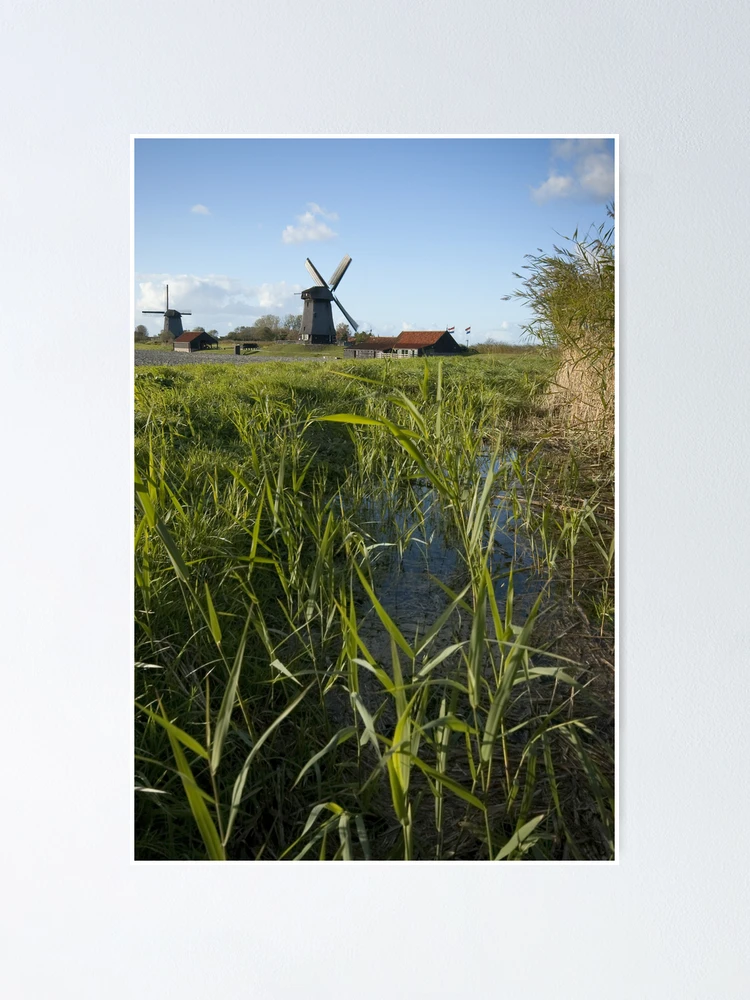
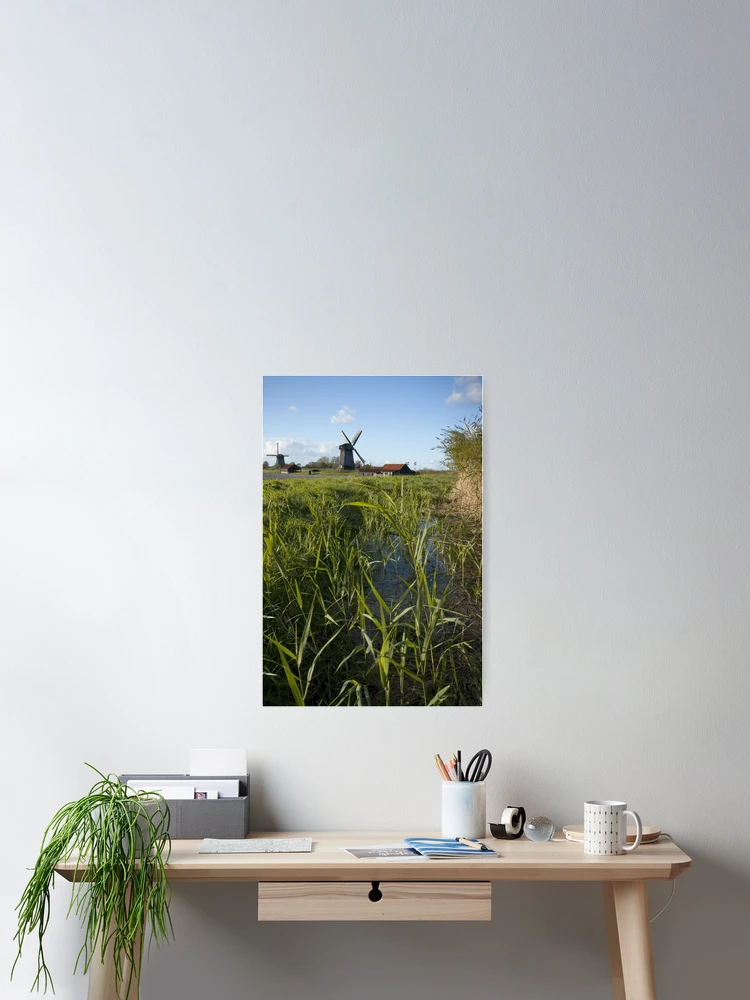

Dutch Roots Poster

Designed and sold by Brendan Schoon
$21.59
Style

PosterHeavy poster paper, semigloss finish
$21.59
 Super-easy returnsProblem? No problem. We’ll fix it, fast.
Product features
- Printed on poster paper. Extremely versatile, making it perfect for reproducing both artwork and photographs
- Custom sizes, based on artwork dimensions. Check size chart if self-framing
- Dimensions include a 1 - 2 inch (2.5 - 5.0cm) white border to assist in framing
- Shipped in protective packaging
- Since every item is made just for you by your local third-party fulfiller, there may be slight variances in the product received
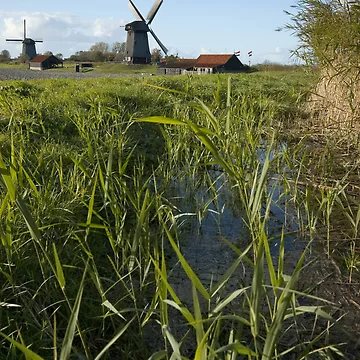
Dutch Roots
Equipment used: Nikon D70s Sigma 10-20mm HSM f4-5.6 Hoya 77mm HD-Polarizing Super Quality Filter Location: Schermerhorn, Noord-Holland, The Netherlands Map: Road Map , Terrain , Satellite Copyright: © Brendan Schoon , All rights reserved. Background Information: In northwestern Europe, the horizontal-axle or vertical windmill (so called due to the dimension of the movement of its sails) dates from the last quarter of the 12th century in the triangle of northern France, eastern England and Flanders. Lynn White Jr. claims that the first certain reference to the European horizontal-axle windmill is dated to 1185 in Weedley, Yorkshire. (This predates Joseph Needham's claim that the earliest known reference is from the 1191 chronicle of Jocelin of Brakelond, in which a Dean Herbert of East Anglia supposedly competed with the mills of the abbey of Bury St Edmunds). These earliest mills were used to grind cereals. The evidence at present is that the earliest type was the sunk post mill, so named because of the large upright post on which the mill's main structure (the "body" or "buck") is balanced. By mounting the body this way, the mill is able to rotate to face the wind direction; an essential requirement for windmills to operate economically in North-Western Europe, where wind directions are variable. By the end of the thirteenth century the masonry tower mill, on which only the timber cap rotated rather than the whole body of the mill, had been introduced. In the Netherlands these stone towerlike mills are called "round or eight-sided stone stage mills, ground-sailers (windmills with sails reaching almost down to the ground), mound mills, etc." (Dutch: ronde/achtkante stenen stelling molens, grond-zeilers, beltmolens, etc.). Dutch tower mills ("torenmolens") are always cylindrical (such as atop castle or city wall towers). Because only the cap of the tower mill needed to be turned the main structure could be made much taller, allowing the sails to be made longer, which enabled them to provide useful work even in low winds. Such mills often have a small auxiliary set of sails called a fantail at the rear of the cap and at right angles to the sails; this rotates the cap through gearing so the sails face into the wind. * Dutch Roots Autumn Delight
Also available on



Looking for something different?
Search below.Related Tags
Posters Tags
This section provides a collection of tags that relate to the Poster on this page. These tags each link to a search for the Posters that relate to the tag.
All Product Tags
This section provides a collection of tags that each link to a search for any products that relate to the tag.
Trending topics
This section provides a collection of tags that each link to a search for any products that relate to the tag.
Secure Payments
100% Secure Payment with 256-bit SSL encryption