

Autotomy Poster

Designed and sold by WorldDesign
$30.22
Style

PosterHeavy poster paper, semigloss finish
$30.22
 Super-easy returnsProblem? No problem. We’ll fix it, fast.
Product features
- Printed on poster paper. Extremely versatile, making it perfect for reproducing both artwork and photographs
- Custom sizes, based on artwork dimensions. Check size chart if self-framing
- Dimensions include a 1 - 2 inch (2.5 - 5.0cm) white border to assist in framing
- Shipped in protective packaging
- Since every item is made just for you by your local third-party fulfiller, there may be slight variances in the product received

Autotomy
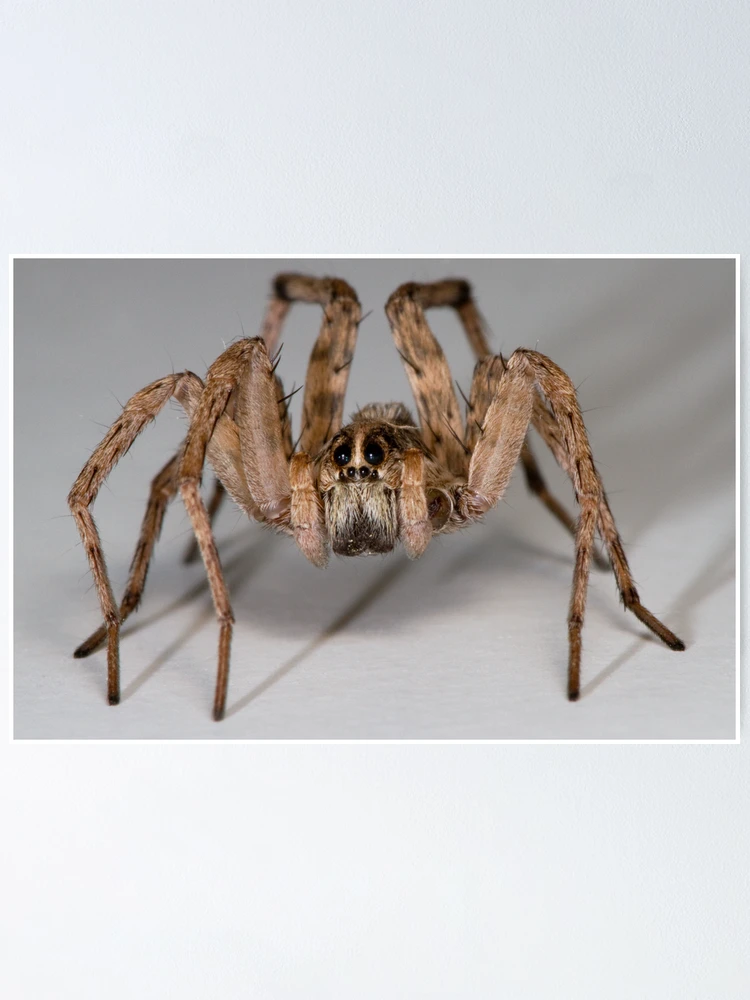
When we find spiders in the house, I gently maneuver them into a container and release outside to go about their important business. However, sometimes, I will photograph them first on a smooth surface in my studio, especially if I'm testing new equipment or have a new species. In this image, I've added a softbox to the primary flash and a second flash (set to -1) to soften the light and shadows associated with macro photography. While photographing this wolf spider, I noticed it was missing one of its legs (please gaze at the left side of the spider's fangs/pedipalps and find that round-looking socket where a leg was once attached). After conducting a bit of research, I found that spiders with missing legs are a common occurrence. In fact, many spiders can intentionally drop a leg to avoid predation or entanglement. Then, during the next instar (molting process), they replace that leg and other damaged areas. The process of dropping a leg is called "autotomy"...additional details follow: Autotomy: also called “autospasy”, this is the act of a spider voluntarily amputating, or dropping off, its own leg(s) in response to a dangerous situation in order to help free itself. Dangerous situations include being grabbed or caught by something, maybe a predator, as well as having a limb get stuck during the process of molting. For example, spiders often come into contact with bees and wasps and may get stung on the leg. Fortunately, the spiders’ leg(s) can be autotomized in a matter of seconds before the bee’s venom can spread into the spider’s body. Certain leg muscles automatically detach themselves at the point of weakness and pull back into the body, letting the leg fall off. Then other muscles act as a closing mechanism while the hemolymph pressure (blood pressure) forces the joint membrane to bulge forward, which succeeds in sealing the wound. If the spider still has molting to do, it will be able to grow that leg back, although it will be thinner and shorter than the rest of the legs. Some species have areas of specific weakness in each leg, which means autotomy will nearly always happen there first. For instance, spiders in the Pimoidae family have autotomy at the patella-tibia joint, but for the majority of other families, the autotomy happens closer to the body at the coxa-trochanter joint. Autotomy is fully controlled by the spider and will not happen while a spider is anesthetized. The willingness of a spider to drop its leg varies across families. Some are very touchy and will autotomize right away, like the Cellar Spiders and Running Crab Spiders. Tarantulas, Jumping Spiders, and Crab Spiders autotomize only as a last resort. Still others, like the Longjawed Orbweavers and the Metellina genus, will not autotomize under any circumstances. Source: Spiders.us
Also available on


Looking for something different?
Search below.Related Tags
Posters Tags
This section provides a collection of tags that relate to the Poster on this page. These tags each link to a search for the Posters that relate to the tag.
All Product Tags
This section provides a collection of tags that each link to a search for any products that relate to the tag.
Trending topics
This section provides a collection of tags that each link to a search for any products that relate to the tag.
Secure Payments
100% Secure Payment with 256-bit SSL encryption


