Foreboding Journal

Designed and sold by Jason Tompkins
$19.48
20% off ends soon
$19.48
 Super-easy returnsProblem? No problem. We’ll fix it, fast.
View size guideFind your fit
Product features
- 128 pages
- 90gsm paper stock
- Wrap around hardback cover
- Fully printed design on the front and back
- Available in a selection of ruled, graph or blank pages
- Since every item is made just for you by your local third-party fulfiller, there may be slight variances in the product received

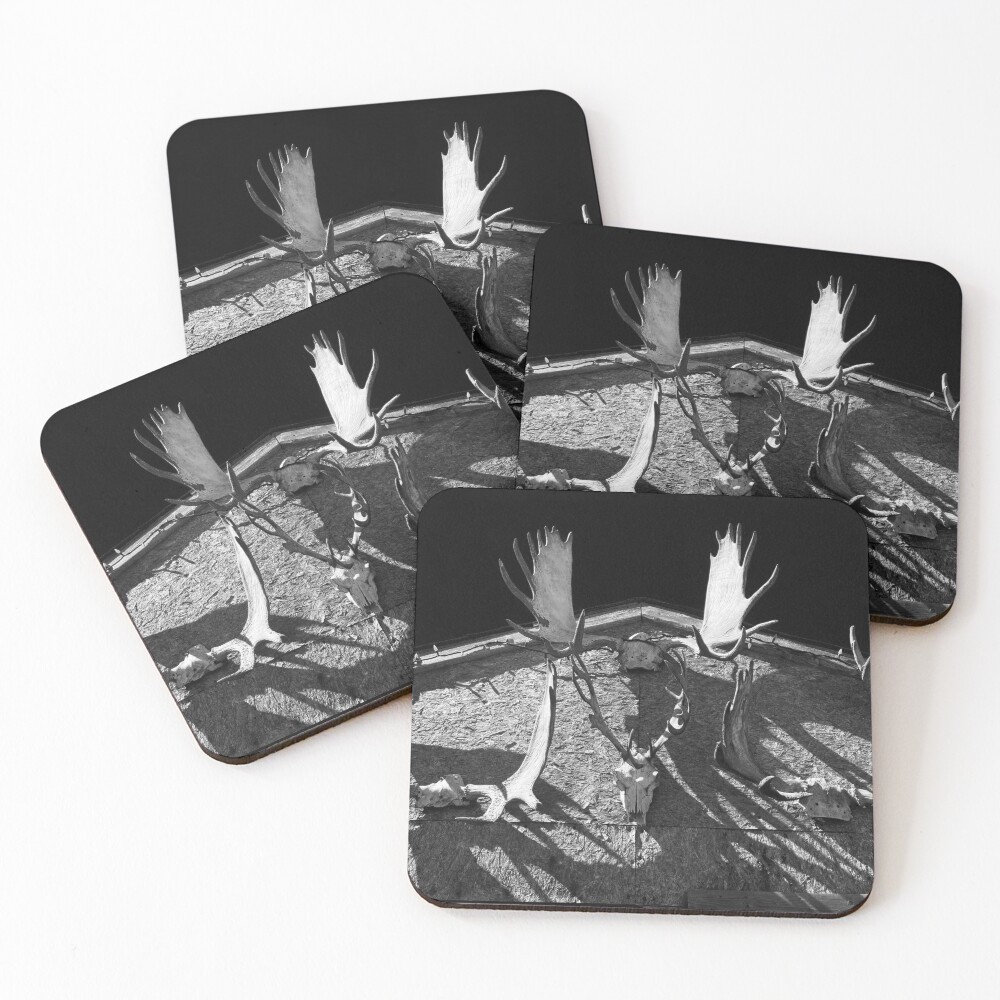
Foreboding
Antlers are extensions of an animal's skull found in members of the Cervidae (deer) family. Antlers are a single structure composed of bone, cartilage, fibrous tissue, skin, nerves, and blood vessels. They are generally found only on males, with the exception of reindeer/caribou. Antlers are shed and regrown each year and function primarily as objects of sexual attraction and as weapons.
Antler comes from the Old French antoillier (see present French : "Andouiller", from ant-, meaning before, oeil, meaning eye and -ier, a suffix indicating an action or state of being) possibly from some form of an unattested Latin word *anteocularis, "before the eye" (and applied to the word for "branch" or "horn").
Antlers are unique to cervids. The ancestors of deer had tusks (long upper canine teeth). In most species, antlers appear to replace tusks. However, one modern species (the water deer) has tusks and no antlers and the muntjacs have small antlers and tusks. The musk deer, which are not true cervids, also bear tusks in place of antlers.
In contrast to antlers, horns—found on pronghorns and bovids, such as sheep, goats, bison and cattle—are two-part structures that usually do not shed. A horn's interior of bone is covered by an exterior sheath made of keratin (the same material as human fingernails and toenails).
Antlers are usually found only on males. Only reindeer (known as caribou in North America) have antlers on the females, and these are normally smaller than those of the males. Nevertheless, fertile does from other species of deer have the capacity to produce antlers on occasion, usually due to increased testosterone levels. The "horns" of a pronghorn (which is not a cervid but a antilocaprid) meet some of the criteria of antlers, but are not considered true antlers because they contain keratin.
An antler on a red deer stag. Velvet covers a growing antler, providing blood flow that supplies oxygen and nutrients.
Each antler grows from an attachment point on the skull called a pedicle. While an antler is growing, it is covered with highly vascular skin called velvet, which supplies oxygen and nutrients to the growing bone. Antlers are considered one of the most exaggerated cases of male secondary sexual traits in the animal kingdom, and grow faster than any other mammal bone. Growth occurs at the tip, and is initially cartilage, which is later replaced by bone tissue. Once the antler has achieved its full size, the velvet is lost and the antler's bone dies. This dead bone structure is the mature antler. In most cases, the bone at the base is destroyed by osteoclasts and the antlers fall off at some point. As a result of their fast growth rate, antlers are considered a handicap since there is an immense nutritional demand on deer to re-grow antlers annually, and thus can be honest signals of metabolic efficiency and food gathering capability.
Also available on







Looking for something different?
Search below.Related Tags
Hardcover Journals Tags
This section provides a collection of tags that relate to the Hardcover Journal on this page. These tags each link to a search for the Hardcover Journals that relate to the tag.
All Product Tags
This section provides a collection of tags that each link to a search for any products that relate to the tag.
Trending topics
This section provides a collection of tags that each link to a search for any products that relate to the tag.
Secure Payments
100% Secure Payment with 256-bit SSL encryption