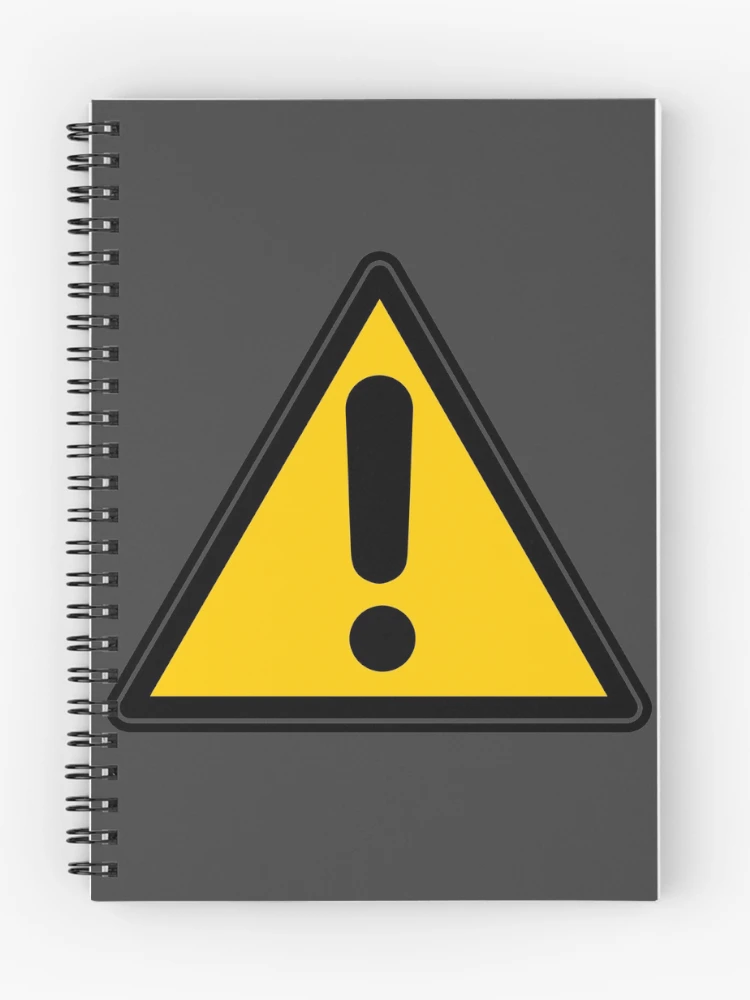


Exclamation Point Journal

Designed and sold by PromoteProgress
$18.19
$15.46 when you buy any 2+
$15.46 when you buy any 2+
$18.19
 Super-easy returnsProblem? No problem. We’ll fix it, fast.
View size guideFind your fit
Product features
- 120 pages
- Cover 350gsm, paper stock 90gsm
- Front cover print from an independent designer
- Available in a selection of ruled or graph pages
- Handy document pocket inside the back cover
- Since every item is made just for you by your local third-party fulfiller, there may be slight variances in the product received
Exclamation Point
History Graphically the exclamation mark is represented as a full stop point with a vertical line above. One theory of its origin is that it is derived from a Latin exclamation of joy (io). The modern graphical representation is believed to have been born in the Middle Ages. Medieval copyists wrote the Latin word io at the end of a sentence to indicate joy. The word io meant "hurray". Over time, the i moved above the o, and the o became smaller, becoming a point.12 The exclamation mark was first introduced into English printing in the 15th century to show emphasis, and was called the "sign of admiration or exclamation"3 or the "note of admiration" until the mid-17th century;4 admiration referred to its Latin sense of wonderment. The exclamation mark did not have its own dedicated key on standard manual typewriters before the 1970s. Instead, one typed a period, backspaced, and typed an apostrophe.5 In the 1950s, secretarial dictation and typesetting manuals in America referred to the mark as "bang",67 perhaps from comic books where the ! appeared in dialogue balloons to represent a gun being fired,8 although the nickname probably emerged from letterpress printing.9 This bang usage is behind the names of the interrobang, an unconventional typographic character, and a shebang line, a feature of Unix computer systems. The exclamation mark (British English) or exclamation point (American English) is a punctuation mark usually used after an interjection or exclamation to indicate strong feelings or high volume (shouting), or to show emphasis, and often marks the end of a sentence. Example: "Watch out!" Similarly, a bare exclamation mark (with nothing before or after) is often used in warning signs. Other uses include: In mathematics it denotes the factorial operation. Several computer languages use "!" at the beginning of an expression to denote logical negation: e.g. "!A" means "the logical negation of A", also called "not A". Some languages use "!" to denote a click consonant. -Wikipedia
Also available on


Looking for something different?
Search below.Related Tags
Spiral Notebooks Tags
This section provides a collection of tags that relate to the Spiral Notebook on this page. These tags each link to a search for the Spiral Notebooks that relate to the tag.
All Product Tags
This section provides a collection of tags that each link to a search for any products that relate to the tag.
Trending topics
This section provides a collection of tags that each link to a search for any products that relate to the tag.
Secure Payments
100% Secure Payment with 256-bit SSL encryption