Square The Ridge Cap

Designed and sold by Jason Tompkins
$21.41
15% off ends soon
$21.41
 Super-easy returnsProblem? No problem. We’ll fix it, fast.
Product features
- The relaxed polo-style cap that isn't just for dads anymore
- Unstructured, medium-to-high-profile crown with slightly curved bill
- Buckle closure for adjustable fit
- 100% cotton in all colors, fabric weight 7 oz. / 240 gsm
- Five-panel design with double-wide front panel for seamless printing
- Sized for ages 13+
- Spot clean with damp cloth
- Since every item is made just for you by your local third-party fulfiller, there may be slight variances in the product received

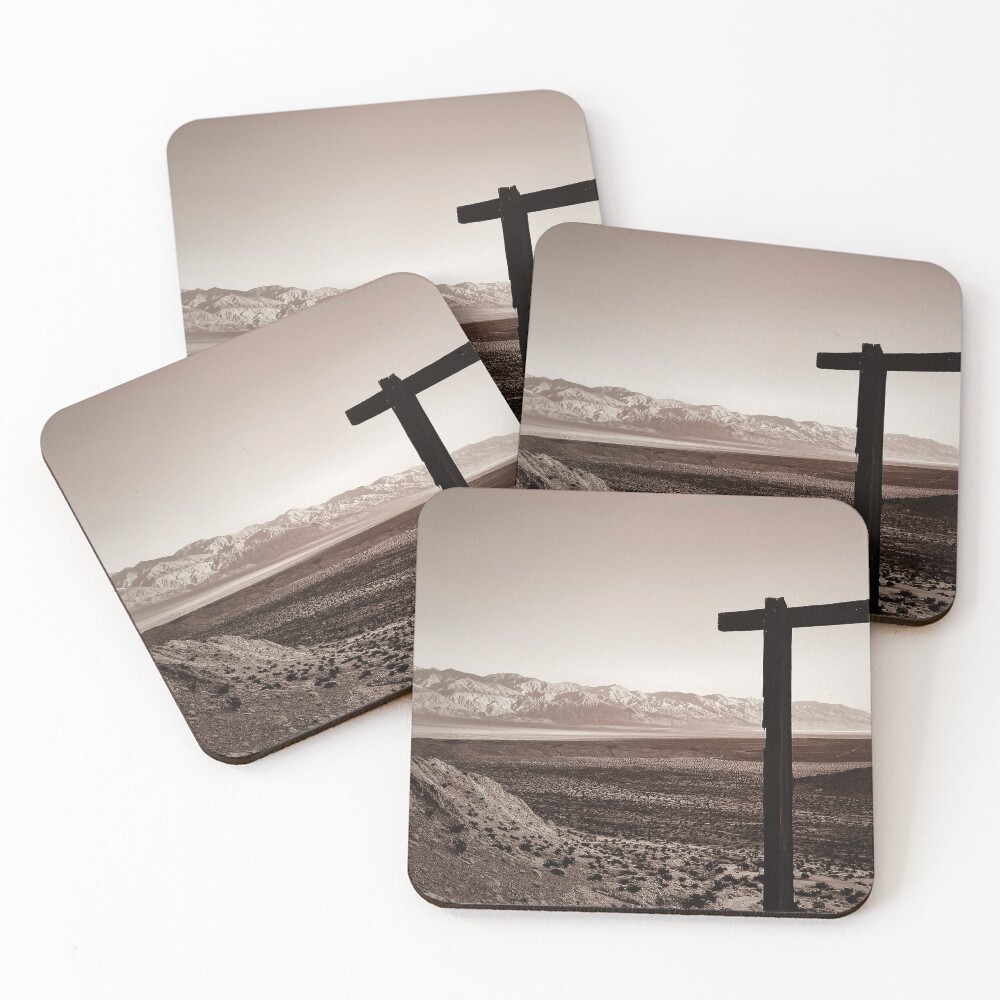
Square The Ridge
The ores that are most famously associated with the area were also the easiest to collect and the most profitable: evaporite deposits such as salts, borate, and talc. Borax was found by Rosie and Aaron Winters near The Ranch at Death Valley (then called Greenland) in 1881. Later that same year, the Eagle Borax Works became Death Valley's first commercial borax operation. William Tell Coleman built the Harmony Borax Works plant and began to process ore in late 1883 or early 1884, continuing until 1888. This mining and smelting company produced borax to make soap and for industrial uses. The end product was shipped out of the valley 165 miles (266 km) to the Mojave railhead in 10-ton-capacity wagons pulled by "twenty-mule teams" that were actually teams of 18 mules and two horses each.
The teams averaged two miles (3 km) an hour and required about 30 days to complete a round trip. The trade name 20-Mule Team Borax was established by Francis Marion Smith's Pacific Coast Borax Company after Smith acquired Coleman's borax holdings in 1890. A memorable advertising campaign used the wagon's image to promote the Boraxo brand of granular hand soap and the Death Valley Days radio and television programs. In 1914, the Death Valley Railroad was built to serve mining operations on the east side of the valley. Mining continued after the collapse of Coleman's empire, and by the late 1920s the area was the world's number one source of borax. Some four to six million years old, the Furnace Creek Formation is the primary source of borate minerals gathered from Death Valley's playas.
Other visitors stayed to prospect for and mine deposits of copper, gold, lead, and silver. These sporadic mining ventures were hampered by their remote location and the harsh desert environment. In December 1903, two men from Ballarat were prospecting for silver. One was an out-of-work Irish miner named Jack Keane and the other was a one-eyed Basque butcher named Domingo Etcharren. Quite by accident, Keane discovered an immense ledge of free-milling gold by the duo's work site and named the claim the Keane Wonder Mine. This started a minor and short-lived gold rush into the area. The Keane Wonder Mine, along with mines at Rhyolite, Skidoo and Harrisburg, were the only ones to extract enough metal ore to make them worthwhile. Outright shams such as Leadfield also occurred, but most ventures quickly ended after a short series of prospecting mines failed to yield evidence of significant ore (these mines now dot the entire area and are a significant hazard to anyone who enters them). The boom towns which sprang up around these mines flourished during the first decade of the 1900s, but soon declined after the Panic of 1907.
Also available on







Looking for something different?
Search below.Related Tags
Dad Hats Tags
This section provides a collection of tags that relate to the Dad Hat on this page. These tags each link to a search for the Dad Hats that relate to the tag.
All Product Tags
This section provides a collection of tags that each link to a search for any products that relate to the tag.
Trending topics
This section provides a collection of tags that each link to a search for any products that relate to the tag.
Secure Payments
100% Secure Payment with 256-bit SSL encryption