Colorful Bike Design Cap

Designed and sold by PromoteProgress
$29.39
$29.39
 Super-easy returnsProblem? No problem. We’ll fix it, fast.
Product features
- The relaxed polo-style cap that isn't just for dads anymore
- Unstructured, medium-to-high-profile crown with slightly curved bill
- Buckle closure for adjustable fit
- 100% cotton in all colors, fabric weight 7 oz. / 240 gsm
- Five-panel design with double-wide front panel for seamless printing
- Sized for ages 13+
- Spot clean with damp cloth
- Since every item is made just for you by your local third-party fulfiller, there may be slight variances in the product received

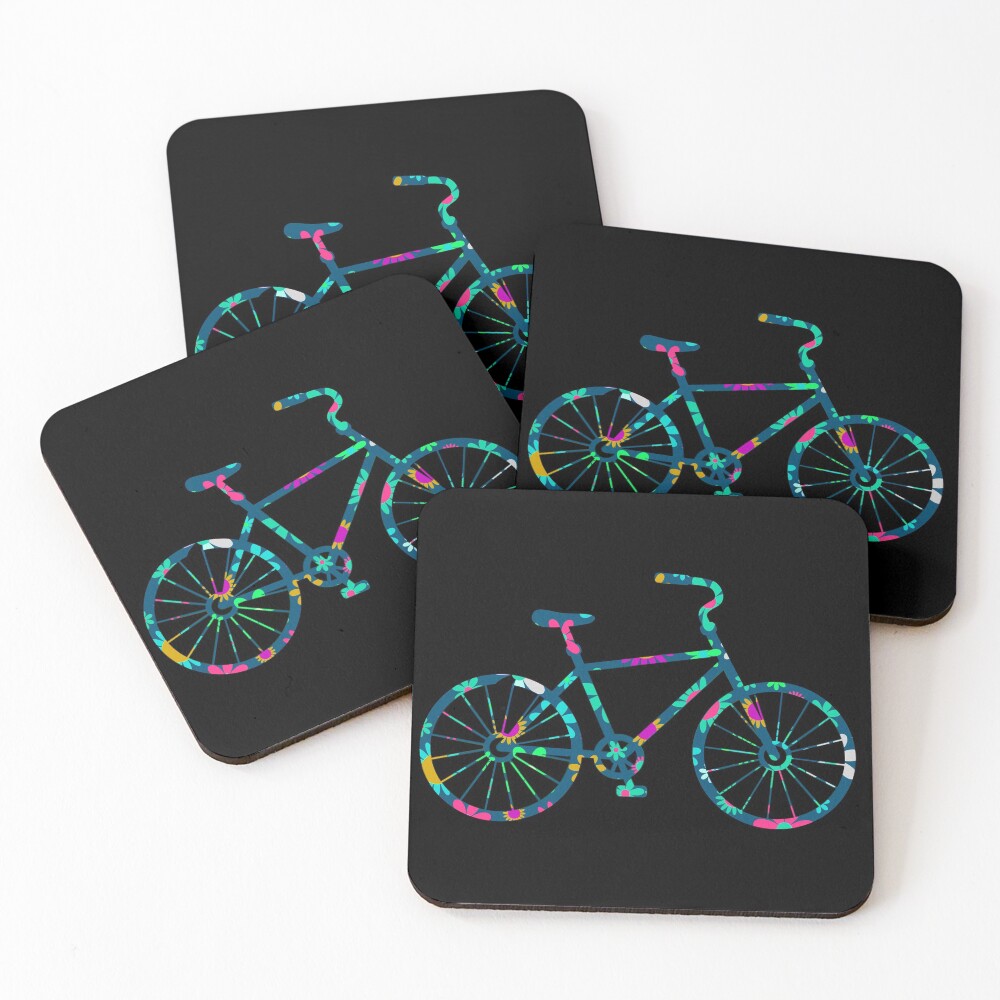
Colorful Bike Design
Colorful Bike Design Bicycle History- The "Dandy horse", also called Draisienne or Laufmaschine, was the first human means of transport to use only two wheels in tandem and was invented by the German Baron Karl von Drais. It is regarded as the modern bicycle's forerunner; Drais introduced it to the public in Mannheim in summer 1817 and in Paris in 1818. Its rider sat astride a wooden frame supported by two in-line wheels and pushed the vehicle along with his or her feet while steering the front wheel. The first mechanically-propelled, two-wheeled vehicle may have been built by Kirkpatrick MacMillan, a Scottish blacksmith, in 1839, although the claim is often disputed.20 He is also associated with the first recorded instance of a cycling traffic offense, when a Glasgow newspaper in 1842 reported an accident in which an anonymous "gentleman from Dumfries-shire... bestride a velocipede... of ingenious design" knocked over a little girl in Glasgow and was fined five shillings. In the early 1860s, Frenchmen Pierre Michaux and Pierre Lallement took bicycle design in a new direction by adding a mechanical crank drive with pedals on an enlarged front wheel (the velocipede). This was the first in mass production. Another French inventor named Douglas Grasso had a failed prototype of Pierre Lallement's bicycle several years earlier. Several inventions followed using rear-wheel drive, the best known being the rod-driven velocipede by Scotsman Thomas McCall in 1869. In that same year, bicycle wheels with wire spokes were patented by Eugène Meyer of Paris.22 The French vélocipède, made of iron and wood, developed into the "penny-farthing" (historically known as an "ordinary bicycle", a retronym, since there was then no other kind).23 It featured a tubular steel frame on which were mounted wire-spoked wheels with solid rubber tires. These bicycles were difficult to ride due to their high seat and poor weight distribution. In 1868 Rowley Turner, a sales agent of the Coventry Sewing Machine Company (which soon became the Coventry Machinists Company), brought a Michaux cycle to Coventry, England. His uncle, Josiah Turner, and business partner James Starley, used this as a basis for the 'Coventry Model' in what became Britain's first cycle factory. 1886 Rover safety bicycle at the British Motor Museum. The first modern bicycle, it featured a rear-wheel-drive, chain-driven cycle with two similar-sized wheels. Dunlop's pneumatic tire was added to the bicycle in 1888. The dwarf ordinary addressed some of these faults by reducing the front wheel diameter and setting the seat further back. This, in turn, required gearing—effected in a variety of ways—to efficiently use pedal power. Having to both pedal and steer via the front wheel remained a problem. Englishman J.K. Starley (nephew of James Starley), J.H. Lawson, and Shergold solved this problem by introducing the chain drive (originated by the unsuccessful "bicyclette" of Englishman Henry Lawson),25 connecting the frame-mounted cranks to the rear wheel. These models were known as safety bicycles, dwarf safeties, or upright bicycles for their lower seat height and better weight distribution, although without pneumatic tires the ride of the smaller-wheeled bicycle would be much rougher than that of the larger-wheeled variety. Starley's 1885 Rover, manufactured in Coventry26 is usually described as the first recognizably modern bicycle. Soon the seat tube was added, creating the modern bike's double-triangle diamond frame. Further innovations increased comfort and ushered in a second bicycle craze, the 1890s Golden Age of Bicycles. In 1888, Scotsman John Boyd Dunlop introduced the first practical pneumatic tire, which soon became universal. Willie Hume demonstrated the supremacy of Dunlop's tyres in 1889, winning the tyre's first-ever races in Ireland and then England.2829 Soon after, the rear freewheel was developed, enabling the rider to coast. This refinement led to the 1890s invention of coaster brakes. Dérailleur gears and hand-operated Bowden cable-pull brakes were also developed during these years, but were only slowly adopted by casual riders. The Svea Velocipede with vertical pedal arrangement and locking hubs was introduced in 1892 by the Swedish engineers Fredrik Ljungström and Birger Ljungström. It attracted attention at the World Fair and was produced in a few thousand units. Cyclists' Touring Club sign on display at the National Museum of Scotland In the 1870s many cycling clubs flourished. They were popular in a time when there were not cars on the market and the principal mode of transportation was horse-drawn vehicles, such the horse and buggy or the horsecar. Among the earliest clubs was The Bicycle Touring Club, which has operated since 1878. By the turn of the century, cycling clubs flourished on both sides of the Atlantic, and touring and racing became widely popular. The Raleigh Bicycle Company was founded in Nottingham, England in 1888. It became the biggest bicycle manufacturing company in the world, making over two million bikes per year. Bicycles and horse buggies were the two mainstays of private transportation just prior to the automobile, and the grading of smooth roads in the late 19th century was stimulated by the widespread advertising, production, and use of these devices.9 More than 1 billion bicycles have been manufactured worldwide as of the early 21st century. Bicycles are the most common vehicle of any kind in the world, and the most numerous model of any kind of vehicle, whether human-powered or motor vehicle, is the Chinese Flying Pigeon, with numbers exceeding 500 million. The next most numerous vehicle, the Honda Super Cub motorcycle, has more than 60 million units made, while most produced car, the Toyota Corolla, has reached 35 million and counting. Source: Wikipedia
Also available on



Looking for something different?
Search below.Related Tags
Dad Hats Tags
This section provides a collection of tags that relate to the Dad Hat on this page. These tags each link to a search for the Dad Hats that relate to the tag.
All Product Tags
This section provides a collection of tags that each link to a search for any products that relate to the tag.
Trending topics
This section provides a collection of tags that each link to a search for any products that relate to the tag.
Secure Payments
100% Secure Payment with 256-bit SSL encryption