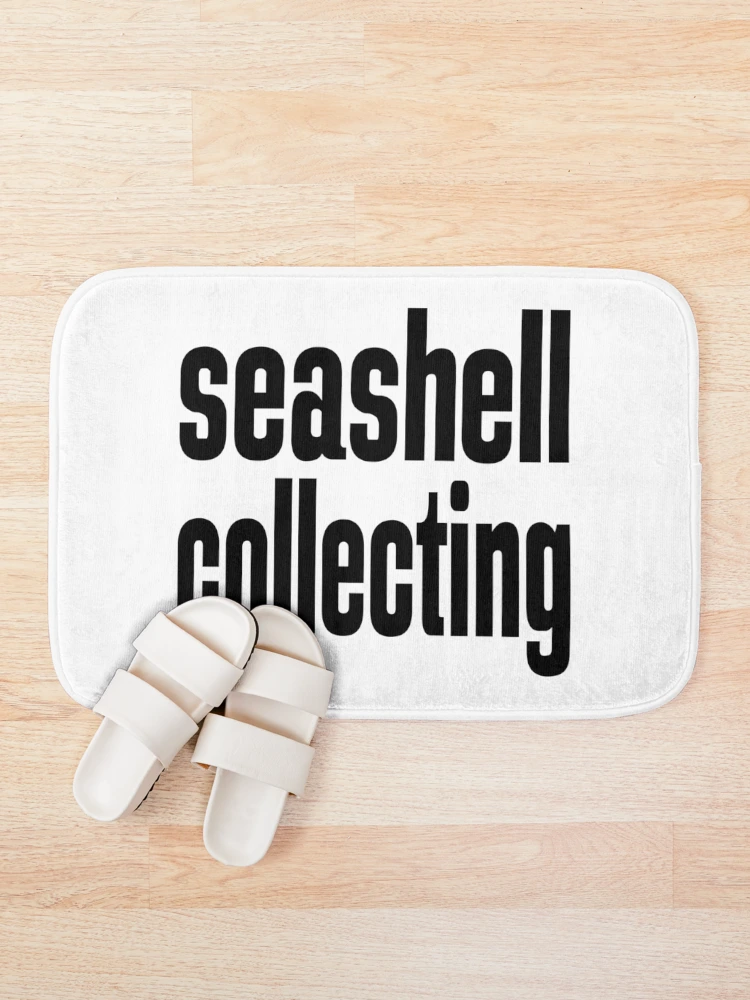


SeaShell Collecting Sea Shell Collecting Bath Mat

Designed and sold by ProjectX23
$28.03
$28.03
 Super-easy returnsProblem? No problem. We’ll fix it, fast.
Product features
- Step out of the shower onto a soft, spongy, absorbent work of art
- Foam cushion and non-slip base
- 100% polyester microfiber face and polyester back
- Full-color fade-resistant design printed for you when you order
- Available in multiple sizes
- Machine wash cold
- Since every item is made just for you by your local third-party fulfiller, there may be slight variances in the product received

SeaShell Collecting Sea Shell Collecting
Sea Shell Collecting
A seashell or sea shell, also known simply as a shell, is a hard, protective outer layer created by an animal that lives in the sea. The shell is part of the body of the animal. Empty seashells are often found washed up on beaches by beachcombers. The shells are empty because the animal has died and the soft parts have been eaten by another animal or have rotted out.
The term seashell usually refers to the exoskeleton of an invertebrate (an animal without a backbone), and is typically composed of calcium carbonate or chitin. Most shells that are found on beaches are the shells of marine mollusks, partly because these shells are usually made of calcium carbonate, and endure better than shells made of chitin.
Also available on


Looking for something different?
Search below.Related Tags
Bath Mats Tags
This section provides a collection of tags that relate to the Bath Mat on this page. These tags each link to a search for the Bath Mats that relate to the tag.
All Product Tags
This section provides a collection of tags that each link to a search for any products that relate to the tag.
Trending topics
This section provides a collection of tags that each link to a search for any products that relate to the tag.
Secure Payments
100% Secure Payment with 256-bit SSL encryption


